
Zoning and municipal planning insights
Join our early access program and receive free access →
Join our early access program and receive free access →
Back to Blogs

BiGyan
July 27, 2026
8 min read
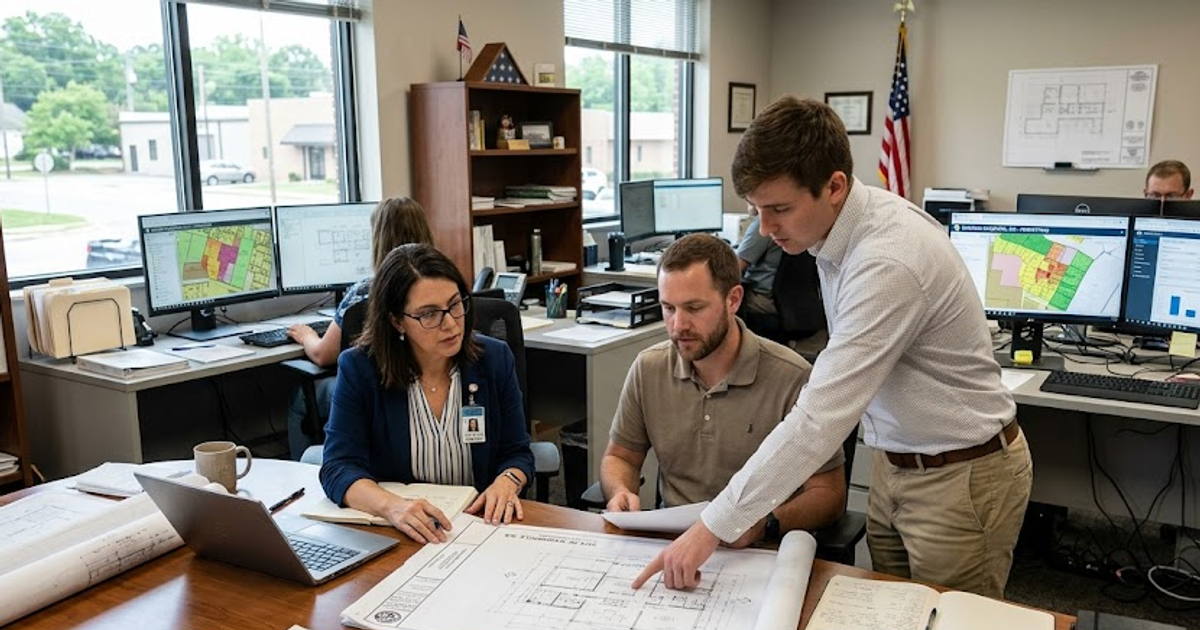
Georgia's permitting process just got more demanding. With Senate Bill 447, signed into law by Governor Brian Kemp and effective July 1, 2026, municipalities must meet stricter review deadlines, provide clear documentation, and deliver greater transparency throughout the permitting process.
For planning and permitting departments already working with limited time and resources, that's a major operational shift, and one where Conflation Labs' AI for Georgia municipal permitting can make a real difference.
This isn't about replacing your existing permitting software or allowing AI to make approval decisions. It's about understanding what SB 447 requires, identifying where the new deadlines put the most pressure on staff, and using AI to handle repetitive administrative work so reviewers can focus on the decisions that require their expertise.
SB 447 amends three parts of Georgia law: Title 8 (building codes and private inspections), Title 12 (soil erosion and sedimentation control), and Title 36 (general provisions for counties and municipalities). Together, they create a tighter, more documented permitting process.
The clock starts once an application is complete. Local issuing authorities have five days after filing to determine whether an application contains everything required to begin substantive review. If that notice doesn't go out within five days, the application is automatically deemed complete by law.
Once an application is complete, the local issuing authority must issue or deny the permit within 45 days. This applies to land disturbance permits under amended Code Section 12-7-9. If the authority needs input from a state agency, the clock is tolled while that review is underway. The authority must provide the applicant with list of items requiring external review at the outset.
If a permit is denied and the applicant resubmits with corrections, the authority doesn't get another 45 days. The first resubmission must be reviewed within 20 days; subsequent resubmissions within 14 days. Reviewers cannot raise new issues unrelated to their original comments once an applicant is in the resubmission cycle.
If an applicant adds unrelated material to a resubmission, that addition is treated as a new application and restarts the full review timeline. Misclassifying a resubmission could mean missing a much shorter deadline than the one that actually applies.
Under the Title 8 amendments, when a private professional provider submits an approved inspection report, the local government has two business days to flag deficiencies with specific documentation. No response within that window means the inspection is deemed approved.
Every denial must include specific written reasons explaining where the application is deficient, along with documentation supporting each reason. Authorities cannot deny a permit for anything that isn't an authorized reason under local, state, or federal law.
If a local issuing authority misses any deadline, it must refund all fees collected for that application. Applicants can petition the superior court for mandamus relief, and those petitions receive priority placement on the court's docket.
Starting January 1, 2028, any jurisdiction that issued more than 250 building permits in the prior year must maintain a public website showing real-time status for every building permit application. It must be searchable by permit number, address, or parcel ID, free to access without login, and updated within one business day of any status change. It must also show missed deadlines and the statutory basis for denials.
None of this is impossible to comply with manually. It's just expensive in a way that's easy to underestimate. A five-day completeness check across every incoming application means someone has to review intake volume every single day. A 45-day clock that tolls and resumes depending on external review status means someone has to actively track which applications are paused and which are running. Writing a denial with specific, documented reasons simply takes longer than a general "does not meet requirements" ever did.
Add the public dashboard requirement, and the administrative burden compounds. It's not enough to track deadlines internally; that tracking must be accurate enough to publish. Missing a deadline is no longer just a delay. It's now a fee refund, a documented item on a public dashboard, and potential grounds for a mandamus petition. The complexity was always there in permitting. SB 447 just made the clock and the paper trail behind it legally binding.
Not every part of this process needs automation. But a few specific tasks line up almost exactly with where AI is strongest.
Reviewing erosion and sediment control plans against local ordinances is one of the most time-intensive parts of permitting, and it's the part with the least room to spare once the 45-day clock starts. AI can pre-screen submitted plans, flag likely compliance issues, and hand reviewers a structured starting point instead of a blank sheet. The reviewer still makes the call; AI just removes the hours spent manually cross-referencing every page against the code.
Tracking multiple overlapping deadlines — the 5-day completeness check, the 45-day decision clock, 20- and 14-day resubmission windows, and the 2-business-day inspector response — is exactly the kind of structured, rules-based tracking software that should handle automatically instead of relying on someone's memory or a spreadsheet.
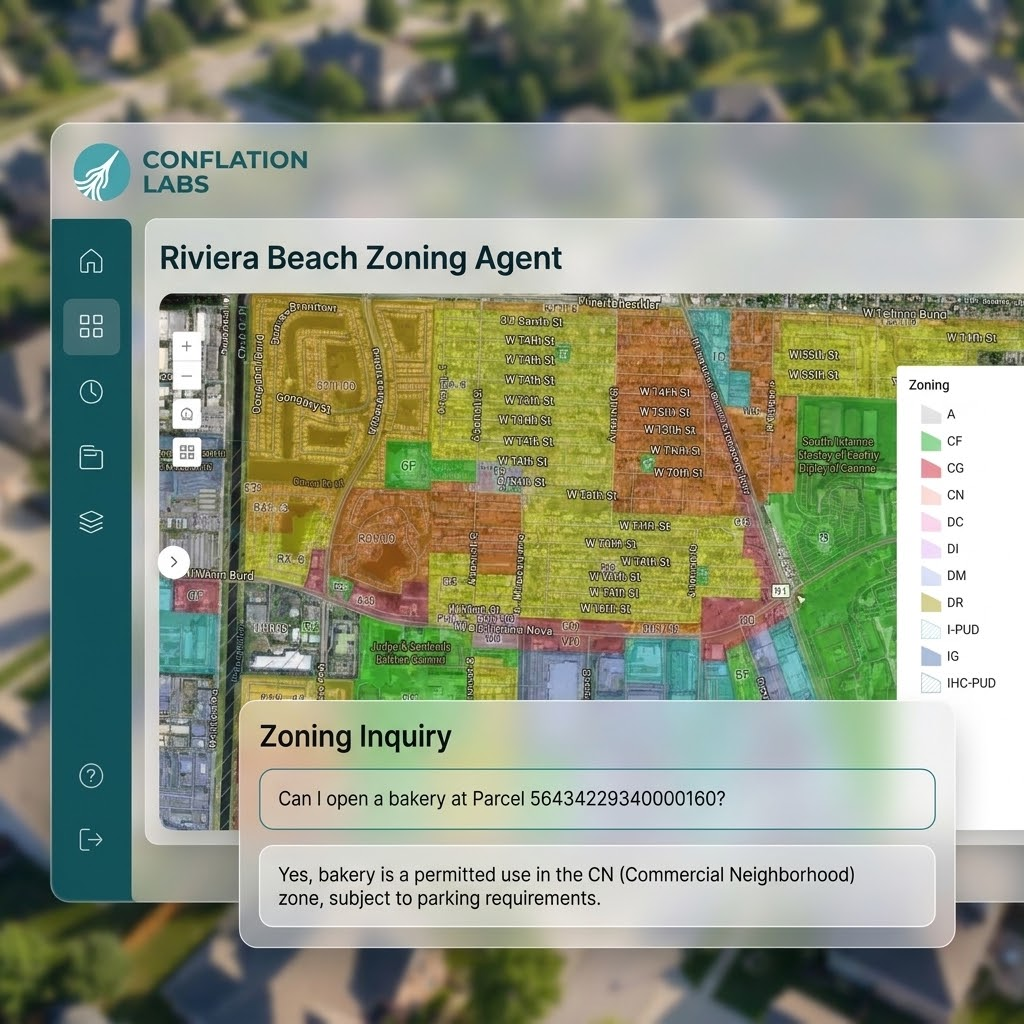
SB 447 doesn't mandate this, but it addresses a related pressure point: a meaningful share of staff time goes to answering the same handful of questions, what's allowed in a zoning district, what setbacks apply, what permits are needed before construction starts. An AI zoning assistant that answers these in plain language, grounded in the municipality's adopted code, cuts repeat inquiries and frees staff to focus on applications actively moving through the 45-day clock.
Since SB 447 requires every denial to include specific written reasons and supporting documentation tied to an authorized legal basis, AI can help reviewers draft that documentation faster and more consistently, structuring the written explanation and reducing the risk that a denial gets challenged for being too vague.
None of this changes who makes the decision. SB 447 raises the bar on speed and documentation, but it doesn't touch who's qualified to determine whether a plan meets Georgia's erosion and sediment control requirements — that's still the reviewer's call, and it should stay that way. AI's role here is narrow and specific: absorb the repetitive checking, tracking, and drafting so the people making the actual determinations have more time to make them well. When municipalities frame AI this way, as a tool that removes friction, not a system that makes decisions, it becomes easier to explain to residents, applicants, and elected officials why it's being used at all.
At Conflation Labs, our AI-powered capabilities are designed around exactly this kind of support role, tools that plug into the review process without taking the decision out of a person’s hands.
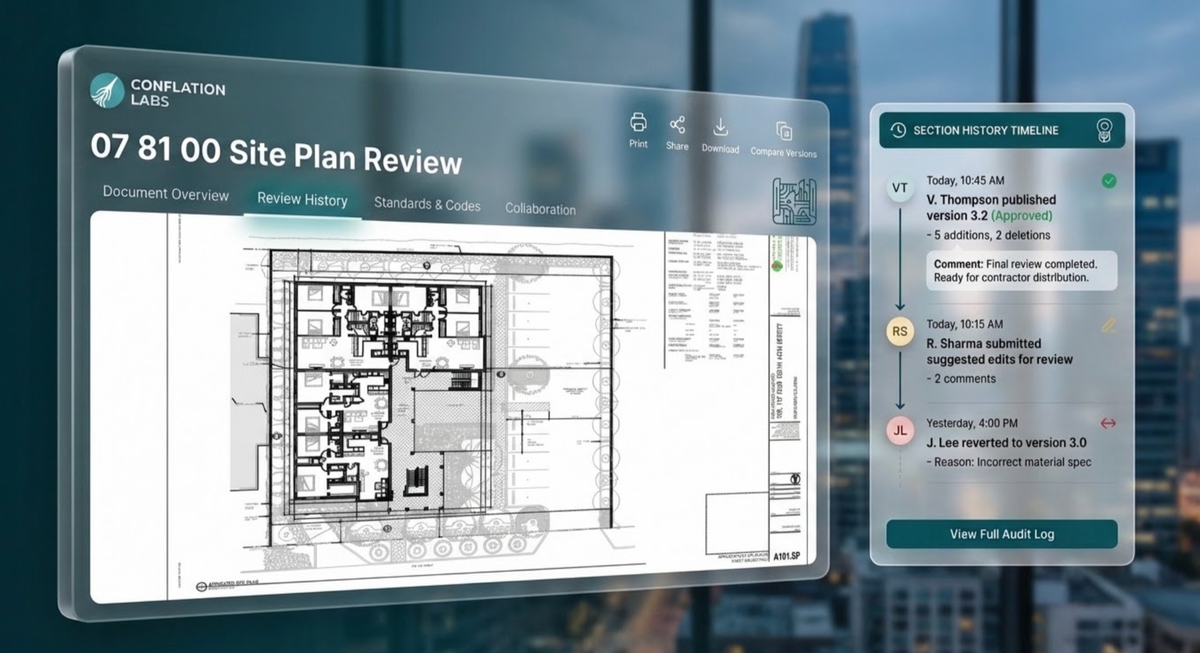
Our Site Plan Reviewer analyzes submitted land disturbance and site plans, flags likely compliance issues, and gives reviewers a structured starting point instead of a blank page. Every finding is a suggestion, not a decision, approval and denial stay entirely with your staff.
Our Zoning AI lets staff, applicants, and residents ask zoning and permitting questions in plain English and get answers based on the municipality’s adopted zoning regulations. Applicants get clearer answers before they submit, which means fewer incomplete applications landing on the five-day clock, and fewer routine calls landing on your staff’s desk.
Both capabilities are built to integrate with the systems municipalities already use. SB 447 compliance should not require replacing your permitting platform; it requires making the workflow inside it faster and more consistent.
Permitting will always require local knowledge and professional judgment. What SB 447 changes is the margin for error on speed and documentation. AI closes that margin: less manual work eating into the 45-day clock, more consistent denial documentation, and clearer information for residents and developers before problems reach formal review. Municipalities that build this in now will be ready when the public dashboard requirement takes effect in 2028.
If your municipality is working through what SB 447 compliance looks like day-to-day, Conflation Labs can help. Our AI‑powered capabilities plug into your existing permitting workflow to speed up plan reviews and make zoning information easier to find, all while keeping final decisions with your team.
Book a personalized demo to have our team walk through your permitting workflows with you, or try the live demo to explore Conflation Labs instantly on your own.