
Zoning and municipal planning insights
Join our early access program and receive free access →
Join our early access program and receive free access →
Back to Blogs

BiGyan
August 5, 2026
10 min read
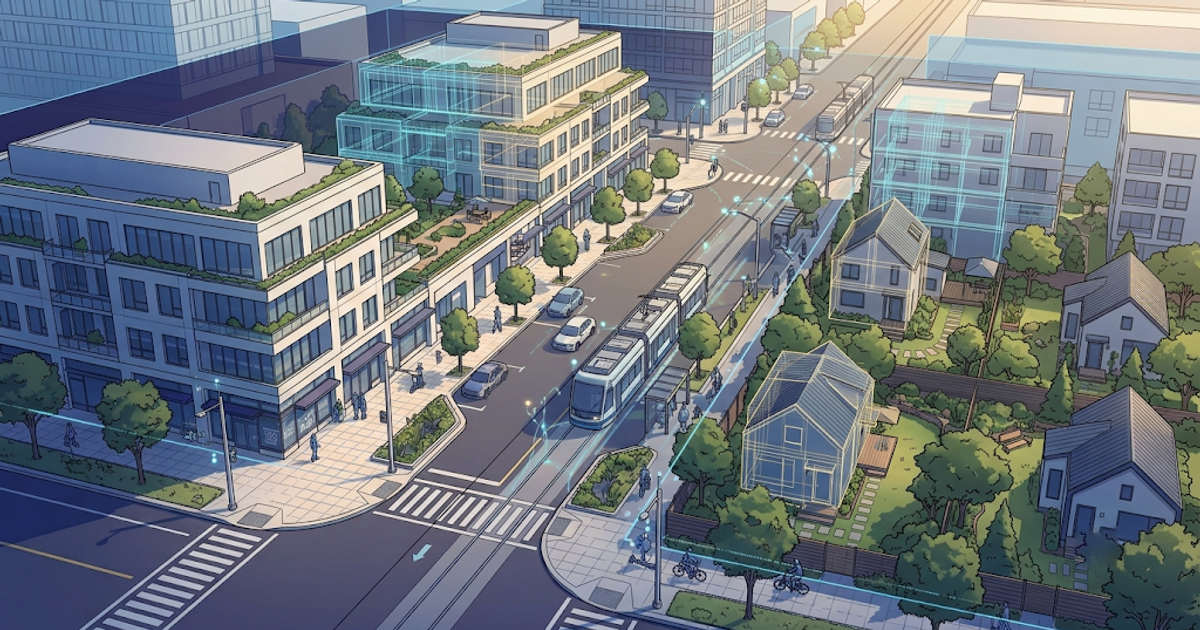
Zoning codes were never meant to be static. They were always intended to evolve as communities change, as housing needs shift, and as new development patterns emerge.
But 2026 is different. The pace of change has accelerated to a level most planning departments are struggling to manage. State legislatures are overriding local zoning. Federal incentives are rewarding cities that streamline permitting. ADU rules that were controversial three years ago are now law in most of the country. Office buildings that were full in 2019 are being converted to apartments today.
For planning staff, keeping up with these changes is not just an administrative challenge. It is the difference between giving residents accurate guidance and giving them outdated information that leads to wasted applications, delayed projects, and frustrated constituents.
This article covers the five most significant zoning trends reshaping US cities in 2026, what they mean for planning departments, and how AI tools are helping teams track, communicate, and apply these changes accurately.
The US housing shortage is driving unprecedented zoning reform. The country is short an estimated 2.8 million housing units, and a major reason is that approximately 75% of residential land in US metro areas is zoned exclusively for single-family homes.
States are responding by overriding local restrictions. California, Massachusetts, Colorado, Maryland, Washington, and others have passed sweeping legislation that requires municipalities to allow duplexes, ADUs, and in some cases multi-family housing on land previously restricted to single-family use.
The challenge for planning departments is not the policy change itself. It is the implementation gap between when a state law takes effect and when the local zoning code is updated to reflect it.
During that gap, planning staff are answering resident questions based on a code that no longer fully applies. A resident asking whether they can build a duplex on their R-1 lot deserves an accurate answer that accounts for both the current local code and the overriding state law. Getting that answer right requires knowing two layers of regulation simultaneously.
What this means for your planning department
Staff need to understand not just the local ordinance but the state legislation that may supersede it for specific project types. This is particularly complex for ADUs, where state law may authorize project types that the local code has not yet formally incorporated.
How AI helps
An AI planning tool trained on both local documents and applicable state law can provide answers that account for both layers simultaneously. When a resident asks whether a duplex is allowed on their R-1 lot, the answer can reflect both the local zone standards and any state law override that applies, with citations to both.
Accessory dwelling units have moved from a niche housing policy experiment to standard practice across the United States.
Massachusetts, Colorado, Maryland, and Washington have all passed laws requiring municipalities to allow ADUs by right in single-family zones. California has had mandatory ADU permissions since 2020 and has continued expanding those rights with each legislative session. Dozens of other states are in active debate.
The result is a surge in ADU questions. Homeowners who had never considered adding a rental unit are now asking whether they can, what the rules are, and how to get started. Planning departments that were fielding a handful of ADU inquiries per week are now fielding dozens.
The volume problem is compounded by complexity. ADU rules are among the most frequently amended sections of any zoning code, and the interaction between state minimums and local standards is not always straightforward. A resident asking "can I build an ADU?" deserves a specific answer, not a general one. The answer depends on their zone, their lot size, the configuration of their existing structure, local setback requirements, and any state law overrides.
What this means for your planning department
ADU inquiry volume is likely to continue increasing for at least the next several years. Handling it manually is a significant time burden. And the risk of giving an outdated answer is high because the rules change frequently.
How AI helps
An AI tool trained on the current local code and updated with each amendment gives consistent, accurate answers to ADU questions at any volume. Staff and residents get the same answer because both are drawing from the same source. When the code is updated, the AI is updated, and every subsequent answer reflects the current rules.
Commercial office vacancy rates exceeded 19% in 2025 and remain elevated in most major metros. Developers and cities are responding by converting vacant office buildings into residential units, and the planning questions this generates are unlike anything most zoning codes were written to address.
Can an office building in a C-2 zone be converted to residential use? What parking requirements apply? What setback, light, and ventilation standards must the converted units meet? Do the units count toward affordable housing requirements? What discretionary approvals are required, and what is the timeline?
These are not simple zoning lookups. They require reading multiple sections of the code simultaneously, understanding how commercial and residential standards interact, and in many cases identifying that the existing code does not clearly address the proposed use and that staff judgment is required.
Planning departments in cities with significant office vacancy are seeing a meaningful increase in pre-application inquiries from developers evaluating conversion projects. Each inquiry requires substantial research time.
What this means for your planning department
Office conversion inquiries are more complex than most routine planning questions. They often involve commercial zones, mixed-use provisions, residential standards, parking reform, and affordable housing requirements simultaneously. Staff need efficient access to all of those sections at once.
How AI helps
An AI tool can synthesize the relevant sections of the code across commercial, residential, and mixed-use chapters simultaneously and return a comprehensive answer that identifies which approvals are required, which standards apply, and where the code is ambiguous or silent. This dramatically reduces research time for complex pre-application inquiries while surfacing issues that staff need to address directly.
For decades, zoning codes required new development to include a minimum number of off-street parking spaces. Those requirements are now being eliminated in city after city.
The logic is straightforward. Parking minimums add significant cost to development, reduce the land available for housing and commercial use, and create car-centric built environments that undermine walkability and transit investment. Many cities built around parking mandates have concluded they can produce more housing and better neighborhoods by letting developers determine how much parking their projects actually need.
Minneapolis eliminated parking minimums citywide in 2021. California eliminated them near transit stations in 2022. More than 100 US cities have reduced or eliminated minimums since 2020. The trend is accelerating.
For planning departments, this creates a specific communication challenge. Residents, developers, and property owners are accustomed to assuming that parking requirements are fixed. When they discover the rules have changed, they often have detailed follow-up questions about what currently applies, what exceptions remain, and how reduced parking affects other aspects of project approval.
What this means for your planning department
Parking standard questions are among the most common pre-application inquiries planning departments receive. When those standards change, the volume of questions increases temporarily as the development community adjusts to the new rules. Staff need to communicate the current standards clearly and consistently.
How AI helps
An AI tool that is updated when parking standards change ensures that every subsequent answer reflects the current requirements. Staff do not need to remember which version of the parking chapter applies to which project type. The AI draws from the current code and cites the relevant section, reducing the risk of giving outdated guidance during a transition period.
Climate-driven risks including flooding, wildfire, and extreme heat are prompting cities to add new overlay districts and updated standards to their zoning codes. From coastal flood zone updates to inland fire hazard severity zones to urban heat island provisions, climate regulation is becoming a routine component of the zoning framework in a growing number of jurisdictions.
These overlays are complex by design. They interact with base zone standards, require site-specific risk assessment, and in some cases impose construction requirements that significantly affect project feasibility. A developer or homeowner whose project is within a climate overlay needs to understand both the base zone standards and the overlay requirements simultaneously.
The challenge is that climate overlay provisions are frequently amended as mapping is updated, new state guidance is issued, or local policy evolves. Keeping track of current requirements across multiple overlays is difficult even for experienced planners.
What this means for your planning department
Climate overlay questions are becoming more common and more complex. They are also among the highest-stakes questions a planner can answer, because giving incorrect guidance about a flood zone or fire hazard requirement can have serious consequences for project safety and legal liability.
How AI helps
An AI tool can synthesize base zone standards and overlay requirements together, surfacing the full set of applicable rules for a given project type and location. When overlay provisions are updated, the AI reflects the current version. This reduces the risk of staff or residents operating from outdated information in situations where accuracy matters most.
What connects all five of these trends is a single underlying challenge: zoning codes are changing faster than planning departments can reliably communicate those changes to residents, developers, and their own staff.
When state law overrides local code, staff need to give accurate answers that account for both layers. When ADU rules are amended, every answer to every subsequent ADU question needs to reflect the current version. When parking minimums are eliminated, staff and residents need to know which projects are affected and which exceptions remain. When climate overlays are updated, the stakes of giving outdated information are high.
The traditional approach to this problem is training, internal memos, and periodic code updates. These help, but they are slow, inconsistent, and depend on individual staff members staying current across multiple document types simultaneously.
AI planning tools provide a more reliable solution. Because the AI draws directly from the current version of the document library, its answers are automatically current every time a document is updated. Staff and residents get consistent, cited answers regardless of who is asking or when.Conclusion
Zoning is changing faster in 2026 than at any point in the past several decades. ADU reform, parking elimination, office conversions, climate overlays, and state preemption are all creating a regulatory environment that is more complex and more fluid than the one most planning departments were built to manage.
The departments that serve their communities best through this period will be those with tools that can keep up with the pace of change, communicate current rules clearly and consistently, and flag the areas where the code is ambiguous or where human judgment is required.
See how Conflation Labs handles your current code, including recent amendments and applicable state law. Request a demo and bring your most complex zoning questions.